- THE MIND-ART-PURPOSE MODELS [THE MAP]
- Posts
- THE POWER OF CYBERNETICS
THE POWER OF CYBERNETICS
Content Series : Use Cases & Real-World Applications.

SIR DANTE
September 09, 2024

Starting today I will begin a content series on cybernetics that highlights my extensive understanding as it relates to Real-World Applications.
Also Detailing how cybernetics principles influences our Algorithmic systems, deployed by my private community.
First, you need to comprehend: Systems of Feedback Control

A key idea in control systems engineering is feedback control, which compares a system's output to a desired reference or set-point on a continual basis. In order to maintain or bring the system back to the intended condition, the system modifies its input or operation to minimize any deviations.
Here's a more thorough explanation:
1. Sensor Measurement: The system's output is measured by sensors.
2. Comparator: This measured output is compared against a reference input (the desired value).
3. Controller: Based on the difference (error), the controller decides how to adjust the system inputs.
4. Actuator: The controller's decision is implemented through actuators, which could be anything from motors to valves, adjusting the system's operation.
5. Feedback Loop: This process forms a loop where the system continuously self-corrects to achieve or maintain the desired output.
Real-World Applications & Case Studies:
Temperature Control in HVAC Systems:
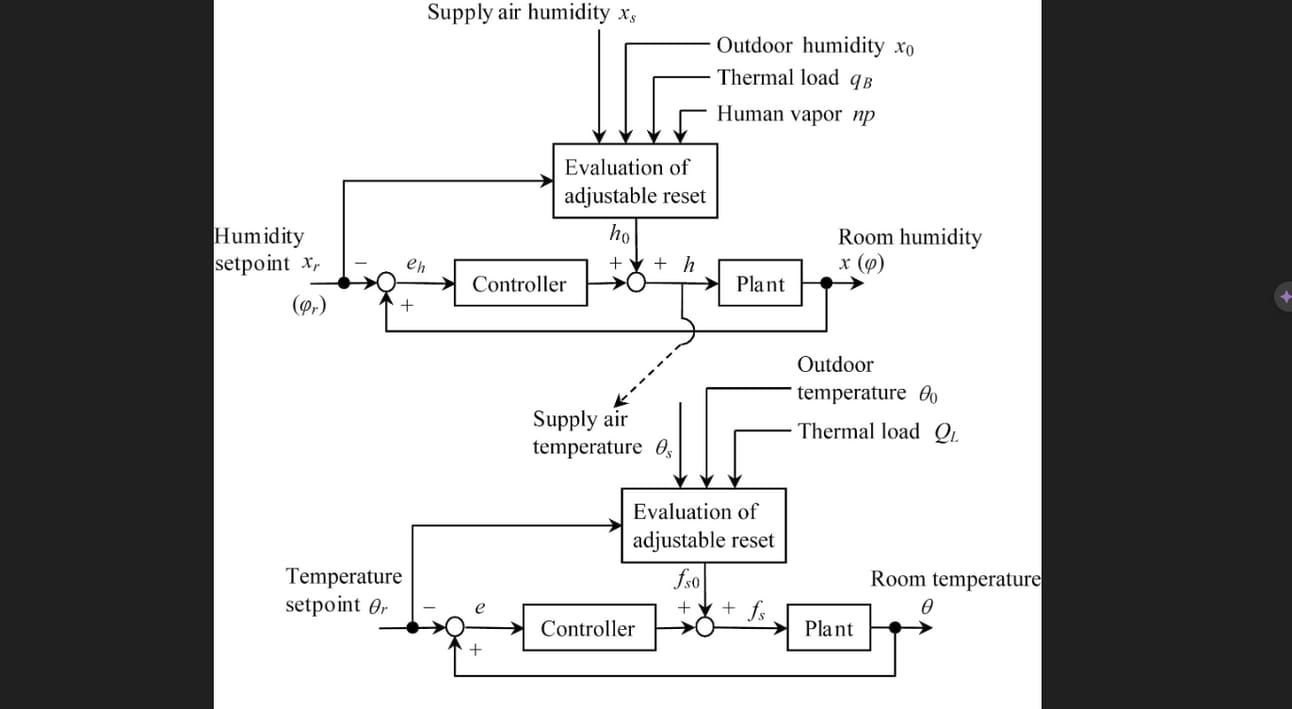
Application: Heating, Ventilation, and Air Conditioning (HVAC) systems use feedback control to maintain desired temperatures.
How it Works:
Sensor: A thermometer measures the current room temperature.
Comparator: This temperature is compared to the set temperature.
Controller: If there's a difference, the HVAC system's controller decides whether to heat or cool the room.
Actuator: The furnace or air conditioner adjusts its operation accordingly.
Feedback: The room temperature is continuously monitored, and the process repeats to keep the temperature stable.
The cybernetics principles:
Homeostasis: The system seeks to maintain a stable internal environment (temperature).
Negative Feedback: The system reduces any deviation from the setpoint, exemplifying negative feedback loops.
Autonomous Vehicles:

Application: Self-driving cars use feedback control for navigation, obstacle avoidance, and maintaining speed.
How it Works:
- Sensors: Cameras, LIDAR, radar, and other sensors collect data about the vehicle's surroundings.
- Processing: This data is processed to understand the environment and the vehicle's state.
- Decision Making: The vehicle's control system decides on steering, acceleration, or braking based on the current conditions versus the desired path or speed.- Actuation: These decisions are implemented through the vehicle's mechanical systems.
- Feedback: Continuous sensory input provides real-time feedback, allowing for immediate adjustments.
The cybernetics principles:
- Dynamic Interaction: The vehicle interacts dynamically with its environment, continuously adjusting to maintain safety and efficiency.
- Control Loops: Multiple feedback loops operate simultaneously, managing different aspects like speed, direction, and safety protocols.
Algorithmic Trading Systems:

Algorithmic Trading system Feedbacks
Application: Algorithmic trading uses feedback control principles to optimize trading decisions based on real-time market data.
How it Works:
- Data Collection: Real-time market data (stock prices, volumes, etc.) is continuously collected.
- Analysis: This data is analyzed against predefined algorithms or models which might include predictive analytics or statistical arbitrage.
- Decision Making: If the current market conditions deviate from the model's predictions or optimal conditions, the system decides whether to buy, sell, or hold assets.
- Execution: Trades are executed automatically based on these decisions.
- Feedback: The outcomes of these trades are fed back into the system, refining the model or adjusting parameters for future trades.
Cybernetics Principles in Play:
- Self-regulation: The system adjusts its strategy based on market feedback, aiming for optimal performance.
- Adaptation: Over time, the trading algorithms might learn from patterns or anomalies, adapting to new market conditions or learning from past trades.
These examples illustrate how feedback control, rooted in cybernetics, is not just a theoretical concept but a practical framework for designing systems that can self-regulate and adapt in various real-world scenarios.
The essence of these systems lies in their ability to use information about their current state to influence future behavior, aiming for stability, efficiency, or optimization.
And so over the last 3 years, my team and I have created a disruptive financial tool that allows users, like yourself, to get as close as possible to being entirely passive, hands-free, and, most importantly, under your complete control.
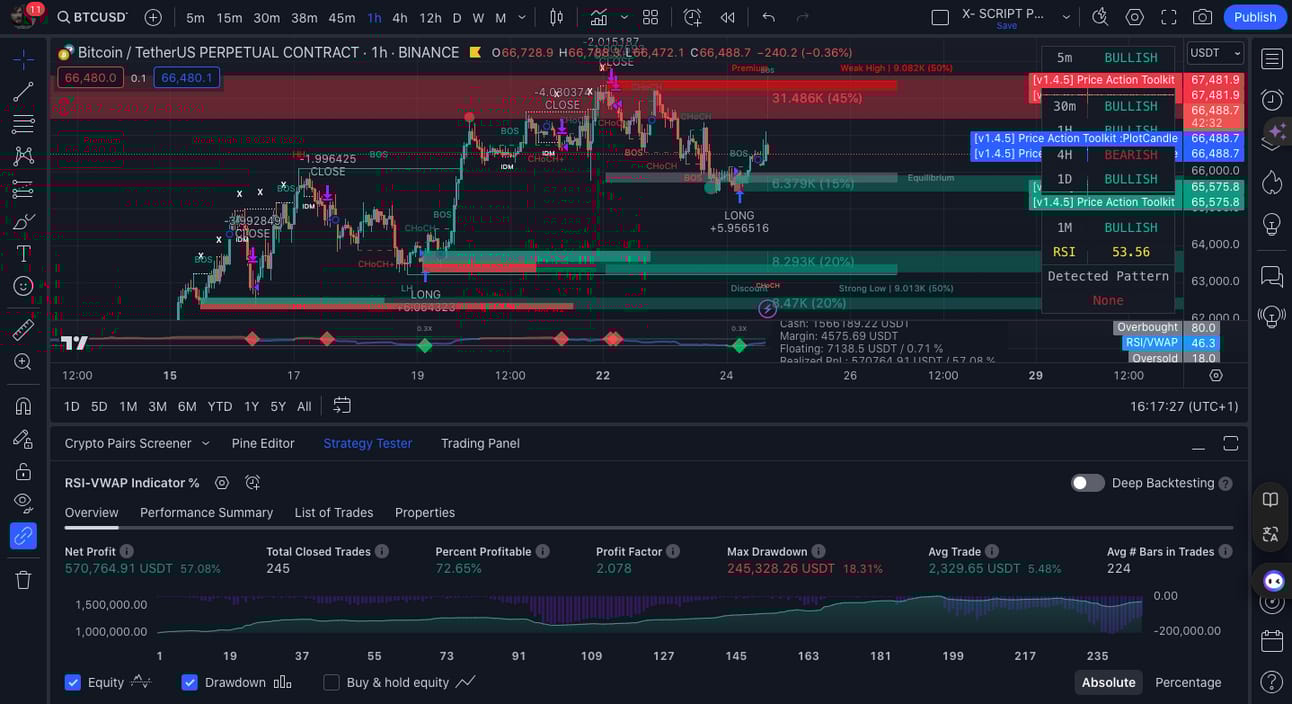
Capitalizes on market volatility, automatically deploying statistically robust machine learning algorithms.
[buy & sell] Long-Short trades are opened and closed automatically based on a predefined mathematical ruleset.
This is currently being deployed by people like you and has a proven track record of generating $80k–150k per month with your complete control.
Learn more about the Algo-Script standard operating procedure for more detailed information on risk management and performance:
Also, you get a 1𝟒-𝐝𝐚𝐲 𝐅𝐑𝐄𝐄 𝐀𝐜𝐜𝐞𝐬𝐬 Here :
Feel free to reply to this email with any questions or contributions you may have.
Until then, maintain Fortitude.
THE 1st